
Planning a photo-friendly corporate event
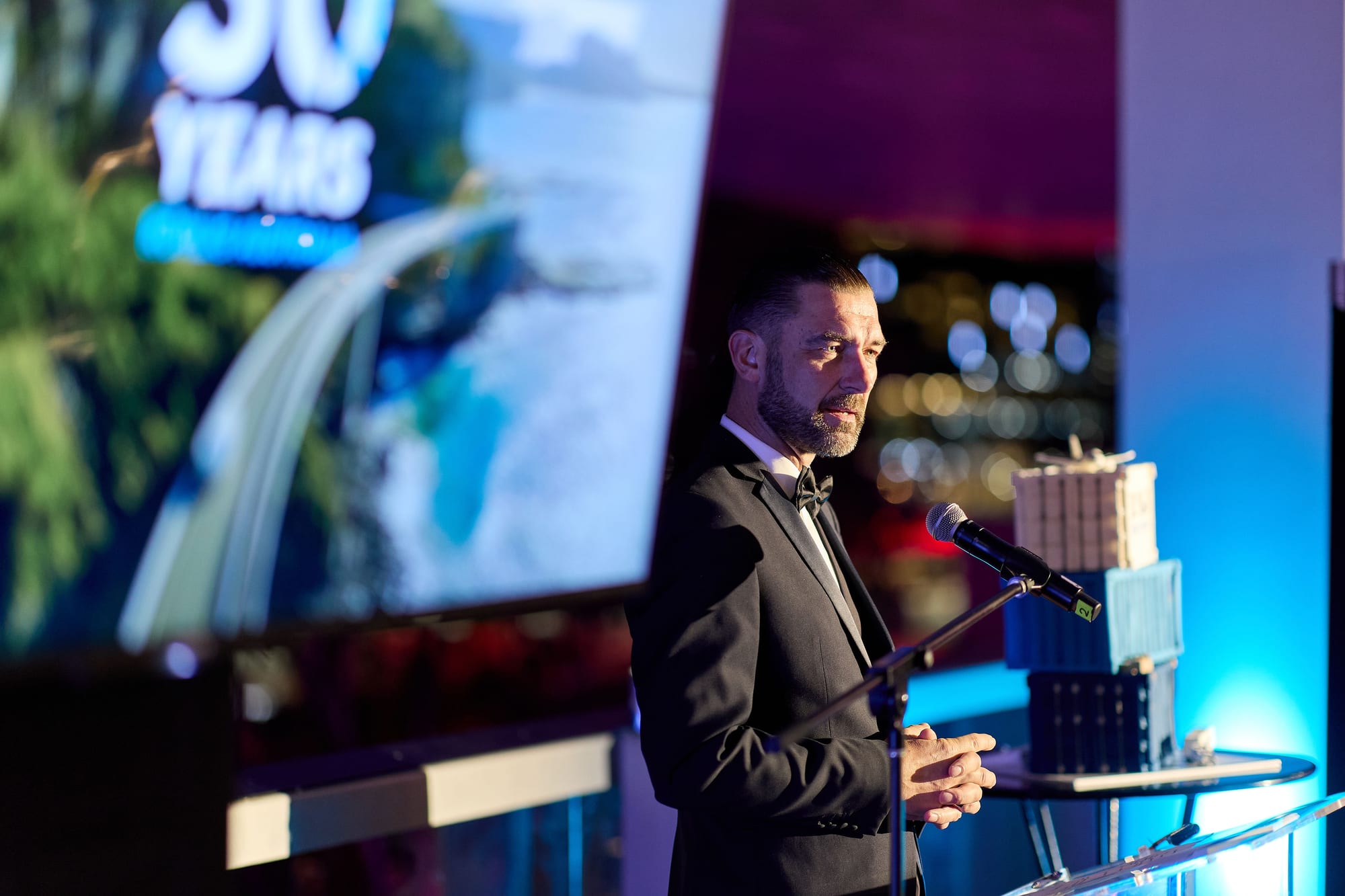
Here is a thing planners almost never hear, because by the time it matters the photographer is already standing in the room with no power to change any of it.
The single biggest lever on how good your event photos turn out is not the photographer. It is the room you put them in, the time you start, and the order you serve the food. All three are decided weeks before anyone picks up a camera, usually by people who never think of themselves as making a photography decision at all.
I have shot a little over a thousand events in eleven years. Galas, conferences, product launches, awards nights, the lot. The pattern is brutally consistent. Two events with the same budget and the same photographer can deliver wildly different galleries, and the difference is almost always baked into the plan before I arrive. So here is the briefing nobody gives the planner. None of it is hard. Most of it is free.
Start before the light goes
If any part of your event has a view, a terrace, a courtyard, or a wall of windows, the light through those windows is an asset with an expiry time. It is gorgeous for about forty minutes around sunset and then it is gone, and no amount of money brings it back that night.
The mistake I see constantly is a 6:30pm arrival drinks slot in a room with a beautiful western aspect, where the speeches are scheduled for 8:00. By 8:00 the windows are black mirrors and the room is running on whatever the venue's downlights happen to be. The forty minutes of free, flattering, unrepeatable light got spent on people queuing for name badges.
You do not have to rebuild the whole evening around the sun. You just have to know when it sets and put something photogenic in front of it. Move the welcome remarks, or the group shot, or the first round of canapés out onto the terrace into that window. If the photographer knows it is coming, they will plan their whole first hour around it. If nobody tells them, they find out when it is already over.
Give the photographer room to disappear
Candid photography is a game of distance and anonymity. A good shooter works the edges of a room with a longer lens, picks moments off across the floor, and stays invisible while doing it. Guests behave naturally because they have half-forgotten anyone is there.
A large, open floor plan makes that easy. The photographer can move fast, find clean angles, and keep enough distance that nobody clocks the lens. A tight, packed room makes it hard. There is nowhere to stand back to, no clean background, no way to frame two people without a third person's shoulder in the way.
And here is the counterintuitive part planners get wrong in both directions. More guests is almost always better, right up until you run out of floor. A busy 200-person room reshuffles itself constantly and hands a photographer an endless supply of fresh moments. But cram those same 200 into a space built for 120 and you have taken away the one thing candids need, which is room to work. The photographer spends the night squeezing between shoulder blades instead of roving. Book the headcount you want. Then book a space that comfortably holds more than that.
The ceiling decides your lighting, not the photographer
This is the one almost nobody knows, and it is the one that quietly wrecks more galleries than anything else on this list. So stay with me for a minute of nerdery, because it is worth real money to understand.
At an indoor evening event, a professional is almost always using flash. But not pointed at your guests. The good technique is to bounce the flash off the ceiling, which turns the whole ceiling into a giant soft light source coming gently from above. It is flattering, it is natural, it looks nothing like "flash". It is most of the reason professional event photos look professional.
That technique needs two things from your venue, and only your venue can provide them.
It needs a ceiling that is white or close to it. Flash bounced off a black ceiling comes back as almost nothing. Flash bounced off a deep red or blue ceiling comes back red or blue, all over your guests' faces, which is its own special problem. The same goes for heavy colored uplighting and saturated AV washes near where people gather. They look fantastic to the eye and they tint every face in the frame.
And it needs that ceiling to be low enough to reach. Under about twelve to fifteen feet is lovely. Once you are past thirty feet, or under an exposed black warehouse roof, or beneath open sky, there is nothing up there to bounce off. The light has too far to travel and comes back too weak to use.
When the ceiling is gone, the photographer has no choice but to point the flash straight at people. And direct flash, even from an expensive camera in expert hands, does a handful of unkind things. It looks like flash, flat and harsh. It throws hard shadows. It puts a hot specular shine on skin, which is most punishing on anyone wearing makeup, exactly the guests who will scrutinize their photo hardest. It flattens the mood of a room that you spent a fortune making feel warm. And because every one of those frames is fighting the light instead of using it, the photographer simply gets fewer keepers per hour. Same skill, same effort, smaller and less flattering gallery, entirely because of the roof.
You will not always get to choose a white, low ceiling. Sometimes the dramatic black-box warehouse or the soaring atrium is the whole point of the venue, and that is a fair trade to make on purpose. Just make it on purpose. If you are signing a space with a thirty-foot black ceiling and you also care about the photos, tell the photographer early so they can bring the extra lighting kit that fakes a ceiling, and budget the time and space for it. The disaster is only a disaster when it is a surprise.
Food is a photography decision
Nobody photographs well mid-bite. A guest holding a half-eaten skewer, a folded napkin, a dripping spoon, or a drink in each hand is a guest the photographer will quietly skip, because there is no flattering version of that frame. It is not squeamishness. It is that those photos never get used, so shooting them is wasted time the camera could spend on something publishable.
This matters most at the start. The opening half hour, when the room is full of arrival energy and everyone is fresh, is the richest candid window of the entire night. If the canapés hit the floor the instant doors open, that golden window arrives with everyone's hands full and their mouths busy.
The fix costs nothing. Hold the food for the first fifteen minutes. Let people arrive, find each other, get a drink, and start talking. The photographer banks a pile of clean candids off that fresh energy, and then the food comes out and nobody minds the wait. Across a long event, stagger the service into defined passes rather than a constant nonstop drip, so there are reliable stretches where hands are free and the camera can work the room. Constant canapés all night long feels generous and reads, in the gallery, as a thinner set of usable photos than you paid for.
When it all goes the wrong way at once
Picture the event that gets every one of these wrong. Thirty guests in a room sized for thirty. A thirty-foot black ceiling, open to the rafters. Canapés circulating wall to wall from the first minute to the last. An 8:30 start in winter, so the light was gone before anyone arrived.
Then a lovely, hopeful organizer books three hours of professional coverage and waits for magic.
There is no magic to be had. Not because the photographer is bad, but because every single condition that produces good photos has been removed from the room. Small floor, no bounce, no clean hands, no light. The best shooter alive delivers a modest gallery from that night and goes home knowing the booking never had a chance, and that none of it was theirs to fix.
Flip those four decisions, none of which cost a cent, and the same photographer hands you twice the gallery. That is the whole point. The photos are mostly won or lost in the planning, long before the camera comes out of the bag.
Where this meets the run of show
Most of what I have just described is information the photographer needs and almost never gets in time. When does the sun set. When do the canapés start. When do the speeches actually open, as opposed to when the agenda from three weeks ago guessed they would. What the ceiling is like in the room they have never seen.
That is a run of show problem at heart, which is a large part of why I built 1pm.app. The photographer gets a live, filtered view of the ROS with their own call time and only the moments that involve them. When the speeches slide twenty minutes, the timeline they are looking at slides too. The planner can note the access window, the sunset moment, the food service passes, and the photographer can plan their first hour around the light instead of discovering it is gone.
Some of it is not really timeline information at all, which is the wider point. The ceiling height and the access instructions belong to the space, so they are recorded once against the room and every event held there inherits them. The food service passes come off the menu. The pax count came from the accepted quote. The run of show is where a supplier reads all of it on the day, but it is one view of an event record that also holds the lead, the quote, the BEO and the invoice. A timeline on its own would still leave somebody typing the sunset time into a text message.
None of that replaces a good room. But it makes sure the photographer walks in already knowing where the good light is, when the hands will be free, and when the moment that actually matters is going to happen. The plan does most of the work. The least we can do is make sure everyone is reading the same one.
Anyway
Pick a room with a pale, reachable ceiling. Give it more floor than your headcount needs. Start while there is still light in the windows. Hold the food for the first fifteen minutes. Do those four free things and your photographer will look like a genius, which, between us, is mostly what a good room lets us get away with.
Chris Founder, 1pm.app