
Why less is more with event photography
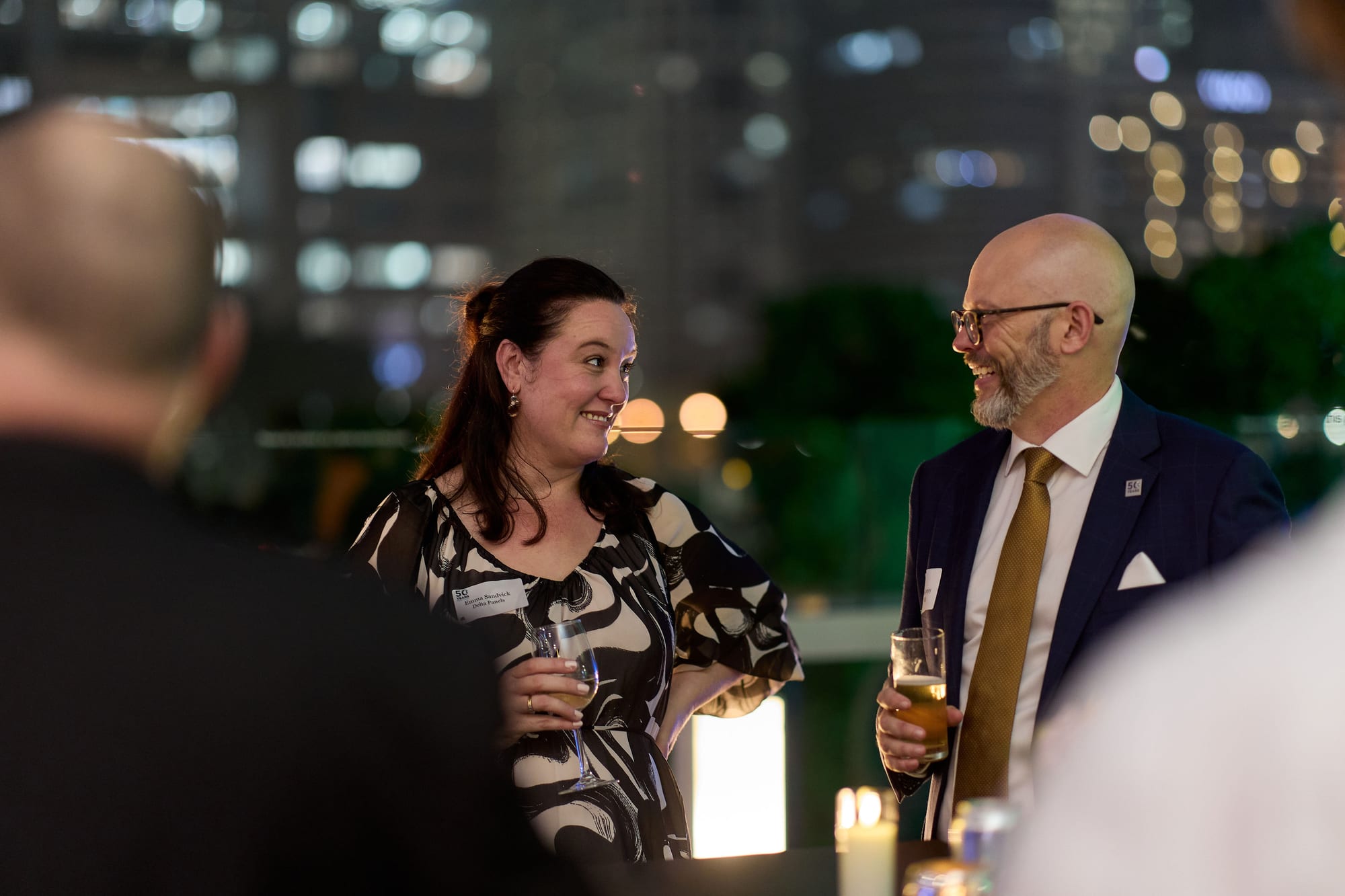
I once photographed a corporate networking event with 16 guests. I was booked for three hours.
By minute fifteen I had photographed everyone in the room. By the end of the first hour I had photographed everyone in the room laughing. Somewhere in hour two I found myself half-crouched behind a sponsor banner, waiting for two people I had already photographed eleven times to produce a new laugh. They produced the same laugh. It is a good laugh. I have roughly forty frames of it.
Nobody did anything wrong at that event. The guests were lovely. The organizer was thrilled someone had "captured everything". But the gallery I delivered was half the size it should have been for the hours billed, and the unspoken truth is that the best ninety minutes of it contained every photo anyone ever used.
After eleven years and around a thousand events, here is the most useful thing almost nobody tells the person doing the booking: how long you need an event photographer is mostly a function of how many guests you have. And for a lot of corporate events, the right number of hours is smaller than you think. Occasionally it is zero.
The arithmetic of candid photography
A modern professional events photographer works fast. No posing, no "everyone squeeze in". At a corporate event they are doing mainly one thing: roving the room and hunting moments. Guests laughing, leaning in, mid-story, mid-toast. During a busy networking session, a good photographer will hand you somewhere around 60 to 70 usable candid photos per hour.
That number is the supply side. The demand side is the room.
Every candid photo needs raw material: a fresh combination of people having a genuine moment. At 150 guests, the room reshuffles itself constantly as people mingle. The photographer does a lap, and by the time they finish it, the room has rearranged and the next lap is effectively a new event. They could rove all night and never run dry.
Below about 100 guests, the laps start to repeat. Below 60, the photographer is working noticeably harder for each frame. Below 30, they are in real trouble, because the room simply cannot generate 60 new moments an hour. There are not enough people, not enough combinations, not enough fresh anything.
So what do you get from a long booking in a small room? One of three things: fewer photos than you expected, more photos of the same six people doing the same gestures, or both. That is not a skill problem. The best photographer in the country cannot photograph moments a room is not producing. It is arithmetic.
The third lap problem
Small rooms have a second problem, and it is sneakier than the math.
On the first lap of a room, a photographer is invisible. On the second lap, they have been noticed. By the third lap of a 30-person event, they are a character in it. Guests straighten up when the lens swings past. The wine glass tilts toward the camera. The laugh becomes the photo-laugh, which every photographer can spot at forty paces and no photographer can fix.
Big rooms give a photographer anonymity, and anonymity is where candids come from. Small rooms take it away, and they take it away faster the longer the photographer stays. Which means the extra hours you booked "to be safe" are not just producing diminishing returns. Past a point, they are actively producing worse photos, because nobody in the room is behaving naturally anymore.
Formalities are a different animal entirely
Everything above is about candids. Formalities play by different rules, and they are where a professional earns their keep at any guest count.
Speeches are worth capturing. Presentations are worth capturing. And awards are in a category of their own, because award photos carry unique value per person. The recipient walking up, the handshake, the trophy held slightly too high. Those photos get used: on LinkedIn that night, in the internal newsletter, in next year's nominations email, framed on a desk. No candid of two people networking does that job.
There is also a quieter effect. A professional photographer working the formalities raises the perceived weight of the evening. Guests register, somewhere below the conscious level, that this event matters enough to be documented properly. For an awards night, that perception is half the point.
So if there were ever an event type built for professional photography, it is the awards dinner. A gala awards night gives you formalities with per-person value, usually a healthy guest count, and a room that wants to be photographed. Book generously there. That is photography money well spent.
A rough booking guide
None of this is exact, but after a thousand events these are the lines I would draw:
- 100+ guests: a roving photographer earns every hour. Candid coverage across the whole event is good value.
- 60 to 100 guests: book around the peak. Arrival buzz, the formalities, and an hour of the busiest mingling. Two hours is often ideal.
- 30 to 60 guests: one tight window. Capture the formalities and one strong candid pass while the energy is up. Sixty to ninety minutes tops.
- Under 30 guests, no formalities: consider skipping the professional altogether. A phone in the hands of your most sociable team member, and the budget saved for the bigger events on your calendar where it actually works. If you still need a pro, keep it to an hour, or shorter if they will do it.
The pattern is the same all the way down: anchor the booking to the formalities, then add candid time in proportion to the size of the room. A typical two-to-three-hour networking event almost never needs two to three hours of constant candid photography.
Two more reasons less is more
The gallery you can actually use. Marketing will use maybe twenty photos from your event. Twenty. An over-booked photographer delivers a 300+ image gallery, which takes longer to edit, longer to deliver, and turns selecting those twenty into an afternoon someone on your team quietly resents. The honest metric for event photography is not cost per hour or even cost per photo. It is cost per photo you actually publish, and shorter bookings nearly always win it.
The same budget buys a better photographer. Photography pricing scales with hours, so a tighter window puts photographers in reach who would otherwise blow the budget. Ninety minutes of a veteran photographer beats four hours of a new photographer every single time, because the excellent one will find more in the room in their first lap than the adequate one finds all night. If you have a fixed number to spend, spend it on quality and concentration, not duration.
Booking a tight window without sweating it
There is one catch with short bookings, and it is the reason people pad them: a ninety-minute window only works if it lands on the right ninety minutes. If the awards run twenty-five minutes late and the photographer's window does not, you have paid for beautiful candids of the bar and missed the only photos that mattered.
This is, at its core, a run of show problem. The photographer needs to know when the formalities actually start, not when the agenda PDF from two weeks ago said they would. It is a large part of why I built 1pm.app. The photographer gets a live, filtered view of the ROS with their own call time and only the items that involve them, and when the speeches slide, the timeline they are looking at slides too. No printed schedule going stale in their back pocket, no "are we still on time?" texts to the one organizer who is busiest.
Confidence in the timeline is what makes the tight booking possible. Padding the hours is just the expensive way of buying that confidence.
Worth saying, since this is a post about booking photographers: the timeline is the part a photographer sees, and it is one page of the thing. 1pm grew into event management software, so the photographer's side of it (the lead, the quote, the agreement they sign, the deposit, the balance invoice) runs in the same place as the timeline. I still shoot, and I run my own clients on it, which is either a strong endorsement or a conflict of interest depending on how you look at it.
Anyway
Count your guests, find your formalities, book the window that covers them, and put what you saved toward the awards night. The big room will give a photographer everything. The small one was never going to, no matter how long they stayed.
Chris Founder, 1pm.app