
What does that plate actually cost you?
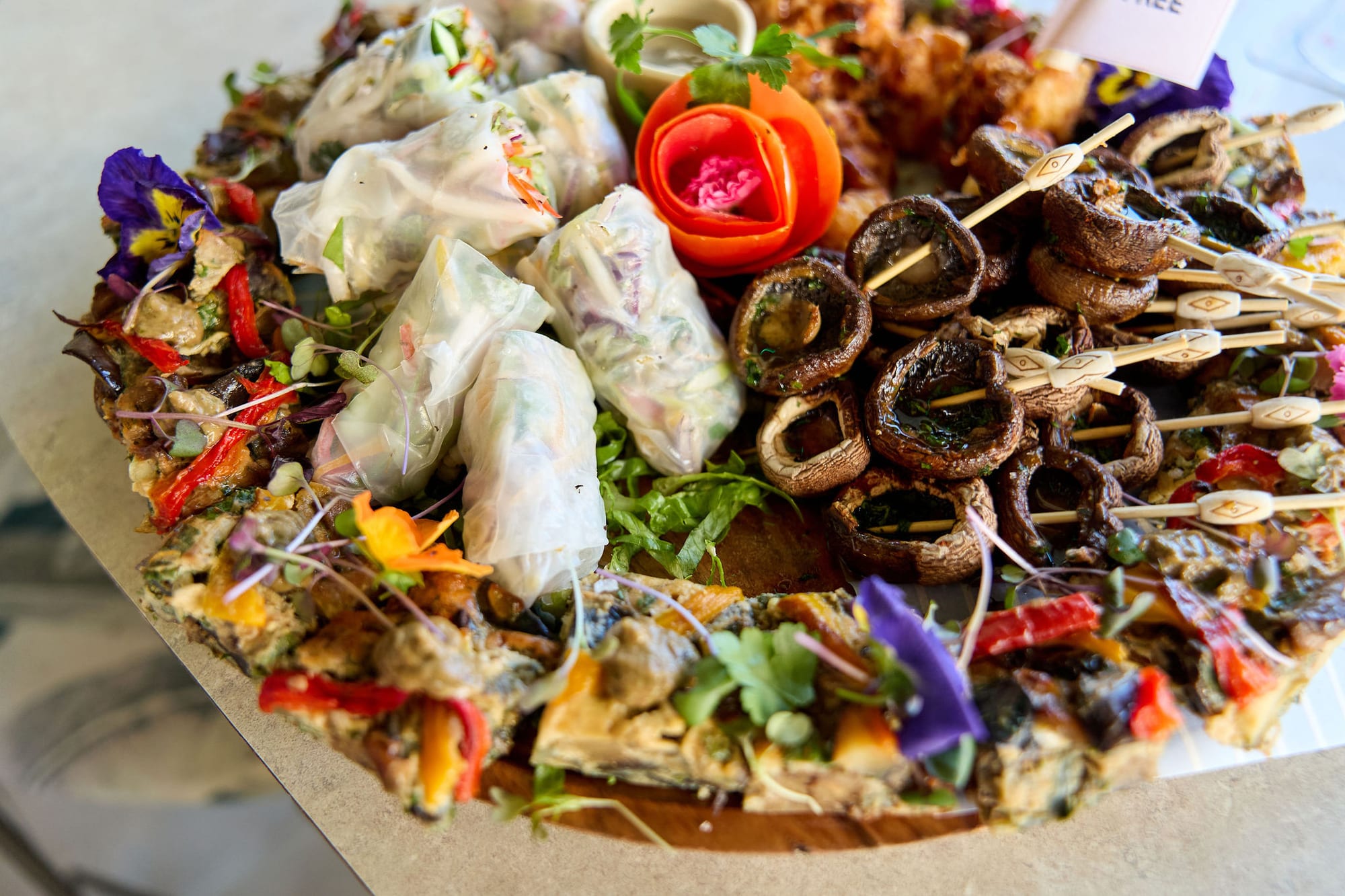
A caterer I know quoted a 220-pax awards dinner at $68 a head. Three courses, plated, canapes on arrival. She had done the same dinner the year before at the same price and it had gone fine, so she sent the quote in eleven minutes and felt good about it.
The event ran beautifully. Nobody complained. The client rebooked.
She lost money on it and did not find out for four months, at which point she found out by accident, because the year-end numbers did not look the way the year had felt.
Here is what had happened in between. Beef had moved. Not dramatically, about 14%, the kind of move you notice at the supplier and then forget by the time you are quoting. Butter had moved more. Her cheese supplier had quietly changed pack size, so the price per case looked the same and the price per kilo was not. And the salmon she was trimming herself had a yield she had never actually measured, so the 180 g on the plate was costing her closer to 260 g of purchased fish.
None of those four things is a mistake. Every one of them is invisible without a number to compare against. Together they turned an $18 margin into about $4.
This is the most common way food businesses lose money. Not theft, not waste, not a bad month. A price that was right eighteen months ago and has been quietly wrong ever since.
The number almost nobody actually knows
Ask a caterer or a chef what their food cost percentage is and you will usually get a number. Ask where the number came from and it gets vaguer.
It is often the number the business was set up on. Sometimes it is an industry benchmark that got adopted as a fact. Occasionally it is worked out properly once a year by someone with a spreadsheet, a free Sunday, and a diminishing will to live.
Meanwhile the actual figure moves every week, because the things underneath it move every week.
The problem is not that operators do not care. It is that costing a menu by hand is genuinely tedious work, and it goes stale the moment you finish it. You cost fourteen dishes over a weekend, feel briefly organized, and then your oil price changes and every one of those fourteen numbers is a little bit wrong again. Do that twice and you stop doing it. This is a rational response to a bad tool, not a character flaw.
Recipe cost is not plate cost
Here is where most hand-built spreadsheets go wrong, and it is worth being specific because the gap is bigger than people expect.
Trim and yield. You buy a side of salmon. You do not serve a side of salmon. After skin, pin bones, belly trim and the tail end that becomes staff lunch, you might get 70% of what you paid for onto plates. If your spreadsheet costs the plate at purchase price per gram, every salmon dish you sell is understated by about 43%. Same for whole birds, same for root vegetables you peel, same for anything with a bone in it.
Buying in one unit and cooking in another. You buy oil by the case and use it by the milliliter. You buy eggs by the dozen and use them by weight in a batter. You buy lemons by count and use them by juice volume. Every one of those is a conversion, and every conversion done by hand at 11pm is a place where a decimal point goes on holiday.
Prep that hides inside other dishes. The jus, the stock, the spice mix, the dressing you make five liters of on a Tuesday. That cost belongs to every dish that uses it, in proportion. In most spreadsheets it belongs to nobody, so it is simply missing from the plate.
Pack size drift. Suppliers change pack sizes far more often than they change headline prices, because it is less noticeable. A case that goes from 4 x 3 L to 4 x 2.5 L at the same price is a 20% increase that will never appear on a price-change notification.
Everything being tied to one price you typed in once. The single most useful property of a costed menu is that changing an ingredient price re-costs everything built on top of it. Without that, costing is not a system, it is an archaeological record of what things cost the week you did the exercise.
What the percentage is actually for
Two numbers matter once you have a real plate cost.
Food cost percentage is plate cost divided by selling price. A $6.50 plate sold at $28 is 23.2%. This is the number kitchens run their menu by, and its value is comparative: it tells you which dishes on your menu are carrying the others.
Margin is the cash left over, $21.50 on that same plate. This is the number that pays for the labor, the vehicle, the kitchen rent, the insurance, and eventually you.
The distinction matters more than it sounds. A dish with a beautiful 18% food cost that sells four times a week is worth less to you than a slightly worse-looking dish that sells sixty. Percentage tells you about the dish. Margin multiplied by volume tells you about the business. Track both and you will start making genuinely different decisions about what stays on the menu, which is the entire point.
For a caterer there is a third use that is worth more than either. When a client asks you to come down $6 a head, a real plate cost tells you in about four seconds whether that is a discount or a donation, and exactly which course you would have to change to make it work. Negotiating without that number is just guessing with confidence.
If you want to see the whole build-up before you go near a spreadsheet, the catering price per head calculator does this sum from food, staff, hire and travel, and tells you where your food cost and labour land against the industry bands. It also shows why pricing off a food cost percentage alone quietly underprices anything with real service on it.
How 1pm does it
Three layers, and each one reads live off the one below it.
Ingredients. You describe what you buy the way the invoice describes it. A case of four 3-litre jugs for $48 is 4 packs, 3 L each, price paid 48. 1pm does the division and shows you $4.00 per liter. There is no unit conversion homework.
Then the fields that close the gaps above, all optional and all set once. Yield percent for trim, so that 70% side of salmon costs what it really costs per usable gram. Density for anything you buy by weight and use by volume, or the reverse. One weighs and one measures for the count-to-weight and count-to-volume bridges (an egg is about 50 g, a lemon gives about 40 ml).
You can also keep more than one supplier's price against the same ingredient and see the comparison, with the one currently driving your costs marked in use.
Recipes. A recipe is ingredient lines plus a yield. 1pm totals the lines and divides by the yield to give cost per serving, or per liter, or per kilo. Prep recipes nest inside other recipes, so the jus is costed once and its cost lands correctly in every dish that uses it. If a line cannot be costed, it says so and tells you why rather than quietly leaving a hole in your total.
Menus. A menu is what the guest reads: courses, dishes, descriptions, dietary tags. Link a dish to its recipe and the plate cost appears beside it, along with the food cost percentage and margin if the dish is priced per head. A prix-fixe menu rolls the whole thing up against the set price, so you can see the food cost of the entire three-course offer at a glance.
Then change one ingredient price. Everything above it re-costs itself. That is the part that turns costing from an annual event into something that is simply true.
The kitchen reports print it all: menu food cost and margin with anything over your target percentage flagged, recipe cost cards with each ingredient's share of the plate, and an ingredient price list showing cost per usable unit and where a cheaper supplier quote is on file with the saving. Every report exports to a spreadsheet and prints clean.
One line matters more than any of the above, so it is worth stating plainly. All of it is planner-only. Plate cost, food cost, margin, supplier prices, none of it appears on the BEO, the client confirmation, the printed menu, or anything a crew member can open. The client sees the menu. You see the menu and what it costs.
The bit that is actually new
Menus and costing sit on top of the whole event system, not beside it.
The menu you costed is the menu on the BEO the kitchen cooks from, the menu on the client's confirmation, and the menu printed on the card on the table. Dietary requirements come in from the guests themselves through a request and land where the kitchen will see them. The covers and service-style mix report aggregates across events. The pricing on the quote comes out of the same catalog.
That is the difference between a costing tool and a costed operation. A standalone recipe-costing app tells you what a plate costs. It cannot tell you that the plate is on Saturday's menu for 180 people, that 14 of them are vegan, and that the client has asked for a $6 reduction.
Professional and Hospitality, plainly
1pm comes in two plans. The difference is only the kitchen.
Professional, $20 a month (or $192 a year, which is $16 a month), is the full event-management product. Leads, quotes and proposals, client confirmations, terms and electronic acceptance, BEOs, spaces and contacts, tasks and automations, requests and onboarding portals, invoicing and online card payments, the live run of show with crew share links, and the reporting suite.
Hospitality, $40 a month (or $384 a year, which is $32 a month), is everything in Professional plus the catering and back-of-house stack: client-facing F&B menus, the ingredient library, the recipe library, plate costing, and the kitchen reports.
Extra team members are $4 a month each on either plan. Every plan includes 25 active crew, and someone only counts while they hold a live link on an upcoming event. There is a 30-day free trial with every feature unlocked, including the Hospitality tools, and it does not ask for a card.
If you run F&B in-house, cater, or care about plate costs, take Hospitality. If you do not touch food, Professional has everything else. You can switch either way at any time.
What this used to cost
Back-of-house costing has existed for a long time. It has just been priced for a different kind of business.
The established catering and events platforms sell this class of feature into hotel groups and multi-site operators, and they price accordingly: four figures a year is normal, five figures is not unusual, implementation and onboarding fees are common, annual contracts are the default, and per-user pricing means adding your sous chef to the system is a conversation with a salesperson. There is nothing wrong with that. Those platforms are built for buyers who have a procurement process, and they are worth the money to them.
It does mean that a six-person catering company, a restaurant doing forty private events a year, or a venue with one function room has historically had two options. Pay for a platform sized for a hotel group, or use a spreadsheet.
Most chose the spreadsheet, and then quietly absorbed the cost of not knowing, which is the most expensive option of the three and the only one that never appears on an invoice.
The arithmetic here is not subtle. Hospitality is $32 a month on the annual plan. If costing your menu properly finds you one dollar a head on a hundred covers a month, it has paid for itself three times over. In practice, the first proper costing exercise a food business does almost always turns up something worse than a dollar, because the whole reason to do it is that nobody has looked.
A quick note about words
Plate cost, food cost, and menu costing all describe the same exercise from different angles. Plate cost is what one serving costs you to produce. Food cost, usually spoken as a percentage, is that figure against what you sell it for. Menu costing (or recipe costing) is the work of establishing both across everything you offer. 1pm does all three from the same ingredient library, so you do not have to pick a vocabulary.
Closing
The caterer from the start of this now costs her menus. It took her most of a Sunday to build the ingredient library, which she describes as the least enjoyable productive day she has had in years, and about twenty minutes a month since.
The 220-pax awards dinner ran again this year. She quoted $74, held the margin, and the client did not blink, because $74 was a defensible number rather than a hopeful one.
That is really the whole argument. You are already doing the hard part, which is the food. Knowing what it costs is the easy part, and it is the only part that decides whether the hard part was worth doing.
Chris Founder, 1pm.app