
A recipe costing walkthrough
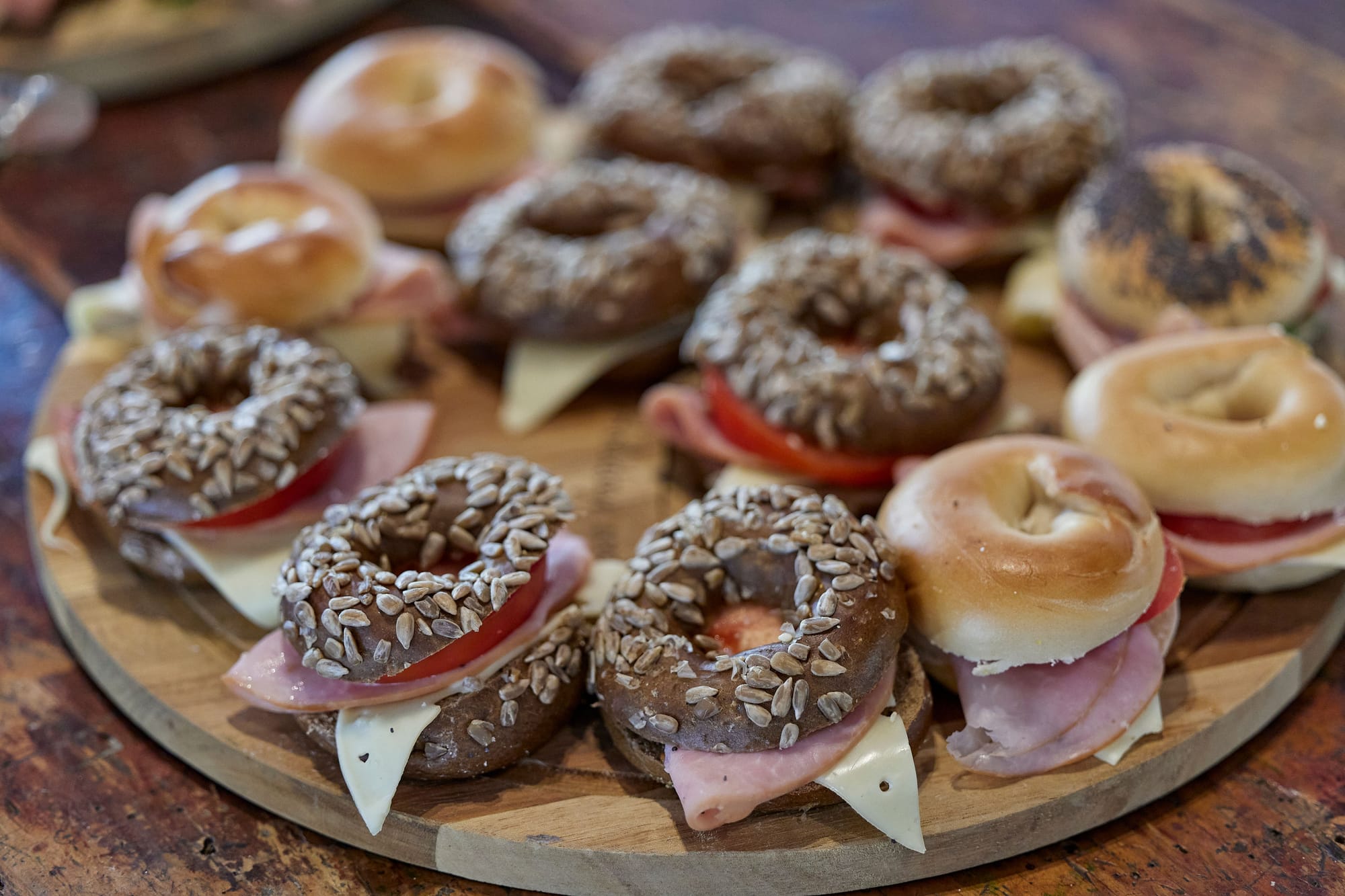
Costing has a reputation for being heavier than it is. If you have run a catering kitchen you already do this in your head or on a spreadsheet, and none of the ideas here will be new. What this walkthrough adds is where each number lives in 1pm, so the totals land exactly where you expect. If you have come from a restaurant that has never run a formal costing system, this is a gentle way in: we build one dish from the ground up, ingredient by ingredient, and name each idea as it turns up, with real numbers you can follow along.
We are costing a plate of beef ragù pappardelle for a 120-cover gala dinner, on a three-course prix-fixe at $34 a head.
The four ideas, once, in plain terms
- Plate cost is what the ingredients on one plate cost you. Just the food. For our ragù it comes out at about $2.02.
- Food cost percentage is the plate cost divided by what you sell the plate for. It is the number kitchens live by, because it holds steady as volumes change. Many kitchens aim somewhere in the high-20s to mid-30s percent, but the target is yours to set, and a pasta and a prime steak sit in very different places.
- Margin is the sell price minus the plate cost, the cash each plate leaves behind to pay for the labor, the room, the power, everything that is not the food.
- Yield means two different things in costing, and 1pm uses both. A recipe's yield is how many servings a batch makes. An ingredient's yield percentage is how much of what you buy survives the trim and reaches the plate. Keep the two apart and the rest follows.
That is the whole vocabulary. The rest is just entering what your invoices already tell you.
Step 1: the ingredients
On the Ingredients page we add each item the way we buy it. 1pm does the division and gives us a unit cost:
- Beef chuck, bought as a 5 kg piece for $45. That is 1 pack × 5 kg, $45, so $9.00 / kg.
- Passata, a case of 6 × 690 g for $12. That is 6 packs × 690 g, $12, so about $2.90 / kg.
- Brown onion, a 10 kg sack for $8, which is $0.80 / kg gross. But we lose roughly a tenth to the skin and top, so we set Yield 90%, and the cost of a usable kilogram becomes $0.89 / kg. This is ingredient yield doing its job: we pay for the whole sack, but we cost against what actually reaches the pan.
- Olive oil, a case of 4 × 3 L for $48, so $4.00 / L.
- Pappardelle, a 5 kg box for $15, so $3.00 / kg.
None of this needed a calculator. We typed in what the invoice said.
Step 2: the recipe
On the Recipes page we create "Beef ragù pappardelle" with a Yield of 10 each, because this batch plates ten. Then we add the lines, using whatever unit suits the method. 1pm converts and costs each one:
- Beef chuck, 1.5 kg → $13.50
- Passata, 1.0 kg → $2.90
- Brown onion, 0.5 kg → $0.44 (costed against the usable price, so the trim is already in it)
- Olive oil, 80 ml → $0.32
- Pappardelle, 1.0 kg → $3.00
The Total batch reads $20.16, and because the yield is 10, the Per serving is $2.02. That figure, $2.02, is the plate cost. If a supplier lifts the price of beef next month, we change it once on the ingredient and this recipe re-costs itself. We never touch the recipe again.
Step 3: a prep recipe, if it earns its keep
If the ragù base turned up in more than one dish, a lasagne as well as the pappardelle, we would mark it as a prep recipe. It would then appear in other recipes' pickers, and each dish that used it would pull in its cost automatically. For a single dish it is not worth the step, but it is how a stock, a house spice mix or a mother sauce gets costed once and reused everywhere.
Step 4: the menu
On the Menus page we build the prix-fixe at $34 per head and add three dishes, each linked to its recipe:
- Heirloom tomato salad, recipe cost $3.10
- Beef ragù pappardelle, recipe cost $2.02
- Lemon tart, recipe cost $2.40
The internal roll-up, the panel only you see, adds those up to a Total plate cost of $7.52. Against the $34 set price that is a food cost of 22.1% and a margin of $26.48 a head. Across all 120 covers the food costs you about $902, the dinner brings in $4,080, and the gross margin is roughly $3,178 before labor and overheads. That last figure is the one worth carrying into the pricing conversation.
None of these numbers leave the builder. The guest's menu, the BEO the kitchen works from, and the confirmation the client signs all show the dishes and the $34, and nothing about what the food costs.
Keeping it honest over time
Two habits keep the numbers trustworthy. Set an ingredient yield on anything you trim heavily, so the plate cost reflects the usable food and not the invoice. And leave the costing to run live: prices drift, and because 1pm reads them fresh every time, a jump in the beef price shows up in your food cost the same day, without a spreadsheet to update. The work is all at the front, in entering ingredients honestly. After that the totals look after themselves.
Set up automations
Costing lives in the builder, but the ordering and prep around it repeats on every event. An automation is a rule you set once: a trigger (when it runs) and one or more actions (what it does). Build them under Automations in the sidebar. They start switched off, so nothing sends until you turn one on, and Show upcoming lists the bookings a rule will run for before you do.
A few that suit a kitchen:
- Order on time. Trigger X days before the event at 5 with Create planner tasks adds your ordering workflow to every confirmed booking: check the menu, confirm pax, place the meat and produce orders.
- Tell the kitchen the numbers. Trigger X days before the event at 3 with Email an address sends the head chef the event name, date and guest count.
- Chase final numbers. Trigger X days before the event at 10 asks the client to confirm pax, so the plate cost you quoted stays the one you cook to.
A note on the two yields
It catches everyone once, so to be clear: a recipe yield of "10 each" means the batch plates ten, and it is what the total cost is divided by to get a cost per serving. An ingredient yield of "90%" means nine-tenths of what you bought is usable after trim, and it quietly raises the cost of a usable unit. Different fields, different jobs, same word. Set each where it belongs and the plate cost tells the truth.
Related articles
- Costed ingredients covers the ingredient library in full.
- Building costed recipes covers recipes, prep recipes and scaling.
- Plate cost, food cost and margin covers the menu numbers in detail.
- Food and beverage menus covers building and printing the menu guests see.